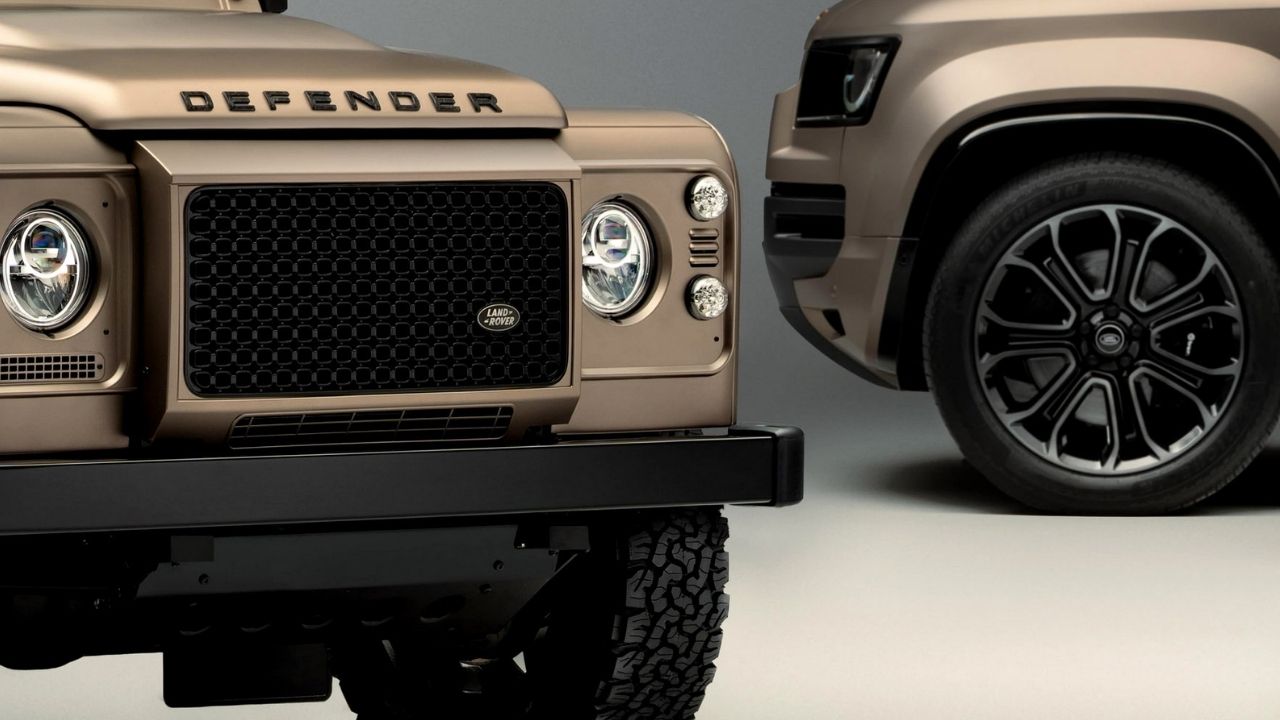
The original Land Rover Defender may have ended production in 2016, but it has never truly left the spotlight. Thanks to Land Rover Classic and its Works Bespoke program, the iconic shape continues to return as a carefully restored and modernised vehicle, built for collectors who want heritage design with modern finishing standards. In its latest interpretation, Land Rover Classic has given the Defender V8 a makeover that visually mirrors the bold personality of the Defender Octa, blending classic proportions with contemporary colour, trim, and cabin themes.
This is not a quick respray or a basic cosmetic refresh. Land Rover says the paint process alone can take around 300 hours, highlighting the level of attention required to achieve the depth, uniformity, and finish expected from a factory-backed restoration. Along with new exterior colours, the cabin is also specified to echo the Octa vibe, with coordinated materials and shades carried across key touchpoints.
Why the Classic Defender Still Matters
Few vehicles carry the same cultural weight as the Defender. It represents rugged utility, global exploration, and a design language that stayed consistent for decades. Even after production ended, demand for properly restored examples remained strong, especially among buyers who wanted something more authentic than a retro inspired new SUV.
That is where Land Rover Classic positions the Works Bespoke program. Instead of building replicas, the team restores select Defenders from the later production years, then upgrades them to a standard that feels special, personal, and premium. These builds are aimed at enthusiasts who want originality, but also want a finish quality that matches modern luxury expectations.
Short Summary Table
Topic |
Details |
|---|---|
Model |
Land Rover Classic Defender V8 restored under Works Bespoke |
Inspiration |
Defender Octa styling and colour themes |
Paint time |
Around 300 hours for Octa inspired exterior paint finishes |
Exterior colours |
Petra Copper, Faroe Green, Sargasso Blue, Narvik Black, Carpathian Grey, Charente Grey |
Finish options |
Glossy or satin depending on buyer preference |
Cabin theme |
Coordinated materials and colours across upholstery and interior surfaces |
Engine |
Land Rover naturally aspirated 5.0 litre V8 |
Output |
400 hp and 515 Nm |
Gearbox |
ZF eight speed automatic |
Hardware updates |
Improved brakes, steering revisions, and a new suspension system |
Official site link |
Octa Inspired Painting That Takes 300 Hours
The headline detail is the time invested in paint. Land Rover Classic states that creating the Octa inspired look can take around 300 hours of painting work. That figure signals the kind of multi-stage process typically associated with high-end restorations, including meticulous preparation, layering, curing, sanding, and finishing.
The Octa inspired colour palette includes:
Petra Copper
Faroe Green
Sargasso Blue
Narvik Black
There are also alternative choices offered, including:
Carpathian Grey
Charente Grey
Buyers can typically select a glossy or satin finish depending on the desired character. Gloss tends to highlight curvature and depth, while satin can give the Defender a more modern, purpose built stance.
To push the Octa association further, customers can opt for additional visual touches, such as a grille finished in glossy black and model scripting on the bonnet executed using chopped carbon fibre. The result is a classic silhouette that feels noticeably more contemporary in its detailing.
Cabin Customisation That Mirrors the Defender Octa
The exterior may be the headline, but the interior is where this Octa inspired theme becomes more immersive. Land Rover Classic offers both fabric and leather upholstery options, with a colour selection designed to feel modern while still fitting the Defender’s utilitarian cabin layout.
Interior colour options mentioned include:
Khaki Green
Light Cloud
Lunar
Burnt Sienna
Ebony
What makes the approach feel more cohesive is that the same shades can be applied beyond the seats. These tones extend across the dashboard, door cards, headliner, transmission controls, and steering wheel elements, creating a deliberate matching theme rather than a simple seat colour choice.
This approach reflects how modern luxury off-roaders are configured today, with coordinated trim packages that make the cabin feel designed as a whole. It also helps the restored Defender feel less like a refurbished old car and more like a tailored product.
V8 Power Without the Octa’s BMW Sourced Engine
While the look nods to the Defender Octa, the powertrain remains distinct. The Octa is associated with a twin turbo 4.4 litre V8 sourced from BMW, whereas the Classic Defender V8 uses Land Rover’s own naturally aspirated 5.0 litre V8.
Key output figures for the Classic Defender V8 are:
Power: 400 hp
Torque: 515 Nm
Power is delivered through a ZF eight speed automatic transmission, similar in layout to what is used in various modern performance SUVs. The combination prioritises strong low-end response and a smooth driving experience, while also delivering the kind of soundtrack and character that many enthusiasts still associate with large naturally aspirated engines.
Chassis and Hardware Updates for a More Modern Drive
Restoring a Defender is not only about appearance. The Classic division also includes mechanical upgrades intended to improve how the vehicle drives compared to older stock examples.
Land Rover Classic includes:
Improved brakes
Steering adjustments
A new suspension system
These changes are important because the Defender platform was originally engineered around utility, durability, and off-road reliability. A modern buyer spending premium money expects better braking confidence, more controlled ride behaviour, and steering that feels less vague, especially at highway speeds. These revisions aim to deliver a classic experience without forcing the owner to accept every old-school dynamic trait.
What This Means for the Defender Brand Story
The Defender name now spans two realities. There is the new Defender lineup, which is modern, tech-forward, and highly capable. Then there is the older shape, which remains emotionally powerful and visually iconic. Land Rover Classic effectively bridges these worlds by preserving the original form while updating the feel and finish to match the expectations created by the newer models.
The Octa inspired approach is also a signal of how much the market values thematic continuity. Buyers want a classic Defender that looks current and deliberate, not one that feels trapped in a different era. By offering Octa inspired paint and cabin themes, Land Rover Classic is aligning the old with the new in a way that feels intentional.
A Practical Alternative Mentioned: Ineos Grenadier
For buyers who love the traditional Defender philosophy but want a brand-new vehicle with that rugged, upright, original spirit, the Ineos Grenadier is often viewed as an alternative. It is positioned as a modern utilitarian 4×4 with old-school proportions and heavy-duty intent. It is also notable because it uses BMW engines, which draws an interesting parallel with the Defender Octa’s BMW sourced V8.
This comparison highlights a broader trend: the market for tough looking, purpose built SUVs is stronger than ever, whether buyers choose a restored icon, a modern factory Defender, or a new challenger with a classic mission.
FAQs
1. Why does Land Rover Classic spend 300 hours on painting?
A. The extended time reflects a detailed, multi-stage paint and finishing process designed to achieve premium quality, consistency, and the chosen gloss or satin effect.
2. Which colours are available in the Octa inspired palette?
A. The Octa inspired colours include Petra Copper, Faroe Green, Sargasso Blue, and Narvik Black. Additional options mentioned include Carpathian Grey and Charente Grey.
3. What engine does the Classic Defender V8 use?
A. It uses Land Rover’s naturally aspirated 5.0 litre V8 producing 400 hp and 515 Nm, paired with a ZF eight speed automatic transmission.
4. Does it use the same engine as the Defender Octa?
A. No. The Defender Octa is associated with a twin turbo 4.4 litre V8 sourced from BMW, while the Classic Defender V8 uses Land Rover’s own 5.0 litre naturally aspirated unit.
5. Are there upgrades beyond paint and interior trim?
A. Yes. Land Rover Classic includes improved brakes, steering revisions, and a new suspension system to enhance driving behaviour.
For More Information Click HERE